
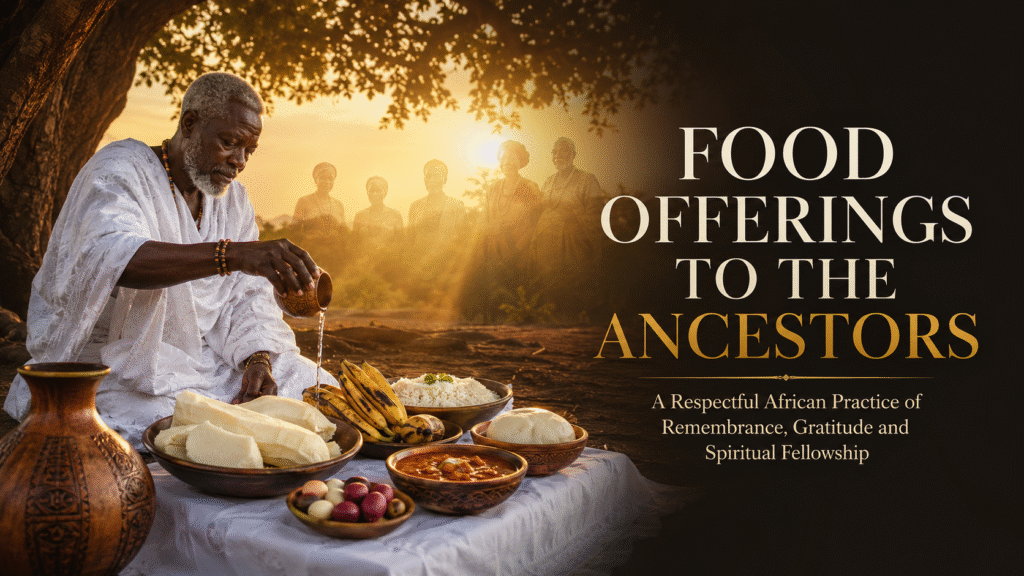
Food Offerings to the Ancestors
A Respectful African Practice Of Remembrance, Gratitude And Spiritual Fellowship
In many African traditional spiritual systems, food is more than physical nourishment. It represents life, hospitality, family unity and the continuing relationship between the living and those who came before them.
Preparing an ancestral food offering is a symbolic way of saying:
“You remain part of this family. We remember you, honour your good legacy and share our blessings with you.”
Within traditional belief, honourable ancestors appreciate being remembered through food, water, prayers and responsible living. The offering is understood as spiritual fellowship rather than physically feeding a deceased person.
Practices differ among Akan, Ewe, Ga, Yoruba, Igbo, Vodun and other African traditions. Therefore, follow your family’s recognised customs when known.
Why Food Is Offered To The Ancestors
Food sustains human life. When a clean portion is respectfully set aside, it symbolises the sharing of life’s provisions with departed family members.
Food offerings may be presented to:
- Express gratitude for life and provision
- Remember departed relatives
- Honour the positive legacy of the family
- Ask for wisdom and peaceful guidance
- Mark an anniversary or family occasion
- Promote unity among living relatives
- Fulfil a recognised family tradition
- Begin or conclude an ancestral remembrance ceremony
Spiritual results cannot be scientifically verified or guaranteed. Nevertheless, this practice can create a meaningful opportunity for gratitude, reflection, cultural education and family remembrance.
Suitable Foods For Ancestral Offerings
The most appropriate food is usually one connected to the family, community or remembered ancestor. If a departed relative was known to appreciate a particular traditional meal, the family may choose to present a small portion of it.
Common offerings may include:
Cooked Yam
Yam can symbolise nourishment, productive work, abundance and connection to the land. It should be properly cooked and placed in a clean bowl or on a clean leaf traditionally used for serving food.
Plantain
Boiled, roasted or cooked plantain may be offered. It can represent provision, growth and the sweetness of family life.
Rice
Plain or traditionally prepared rice may be presented during family remembrance, thanksgiving or festive occasions.
Corn-Based Foods
Banku, kenkey, tuo zaafi and other maize-based foods may be appropriate where they reflect the family’s culture.
Because these foods belong to different Ghanaian culinary traditions, choose the one recognised within your household or community instead of presenting all traditions as identical.
Palm-Nut Soup
A small portion of palm-nut soup may accompany yam, rice or another suitable food. It can be prepared mildly when used for an offering, especially if the altar area must remain clean.
Avoid leaving large quantities of oily soup exposed because it may attract insects and animals.
Kola Nuts
Kola nuts carry ceremonial importance in several West African cultures, particularly in parts of Nigeria and neighbouring regions. Their meaning and method of presentation vary considerably.
Use kola nuts only when they form part of your family or community tradition. Do not copy an unfamiliar practice without proper cultural guidance.
Choosing The Right Offering
Before preparing the offering, consider three questions:
- Is this food appropriate within my family tradition?
- Is the food clean, fresh and respectfully prepared?
- Can I present and dispose of it without creating pollution or attracting dangerous animals?
An ancestral offering does not need to be expensive or excessive. A small, clean portion presented sincerely is more responsible than wasting a large amount of food.
Materials Needed
- A small portion of freshly prepared food
- A clean plate, bowl or appropriate natural leaf
- A clean white cloth
- Clean water for libation
- A cup, bowl or calabash
- A clean and peaceful presentation area
The white cloth commonly represents peace, purity, honour and sincere intention. If white cloth is not culturally appropriate or available, use a clean surface recognised within your tradition.
How To Present A Food Offering
Step 1: Clean Yourself And The Area
Wash your hands and clean the altar, shrine or designated remembrance area. Remove spoiled offerings, dust and unnecessary objects.
Physical cleanliness expresses respect and reduces the risk of insects, unpleasant smells and contamination.
Step 2: Prepare The Food Properly
Cook the food as you normally would, using clean ingredients and utensils. Avoid presenting rotten, mouldy, contaminated or partially eaten food.
Set aside the ancestral portion before people begin eating. This shows that the offering was intentionally prepared rather than made from unwanted leftovers.
Step 3: Arrange A Small Portion
Place a modest portion on a clean plate, bowl or suitable natural leaf. Set it carefully on the white cloth.
The offering may include one staple food and a small accompaniment. There is no need to prepare an excessive feast unless the ceremony is being supervised according to an established family custom.
Step 4: Pour A Small Libation
Pour a little clean water onto bare earth or into a designated libation bowl. Avoid damaging indoor floors, sacred objects or public spaces.
Acknowledge the Supreme Creator first if this follows your tradition. Then acknowledge the Earth and call known, honourable ancestors by name.
Step 5: Speak Respectfully
You may say:
“Supreme Creator, giver of life, we give thanks for this provision.
Earth that supports and nourishes us, receive our respect.
Honourable ancestors of our family, especially [mention known names], we remember you today.
We share this food with you in gratitude and peace. Receive your symbolic portion and guide us toward wisdom, unity, honest work and responsible living.
May peace remain among the living, and may the departed be remembered with honour.”
If a shorter declaration is preferred, say:
“Honourable ancestors of our family, we remember you. We share this food with you in gratitude and peace. May wisdom, unity and responsible blessings remain with this household.”
These words are examples, not compulsory formulas. Speak sincerely and adapt the wording to your family language and customs.
Step 6: Remain Quiet For A Moment
After speaking, remain calm for a few minutes. Use this time to remember the ancestor’s good character, lessons and contribution to the family.
You may also reflect on how the living family can preserve the values being honoured.
Step 7: Leave The Offering Briefly
The food may remain in the designated place for a few hours, according to family custom and local conditions.
Do not leave cooked food exposed overnight in a warm environment where it can spoil, attract insects, rodents or wild animals. Keep children and household pets away from the offering.
Step 8: Dispose Of It Responsibly
After the remembrance period, remove the food respectfully.
Where family tradition permits, a small biodegradable portion may be placed at the foot of a suitable tree or at a recognised ancestral location. Obtain permission before using land that does not belong to you.
Do not leave:
- Plates, bottles, plastic bags or fabric outdoors
- Oily food near rivers or drains
- Food containing substances harmful to animals
- Materials at road junctions or public places
- Offerings in protected forests, cemeteries or sacred locations without permission
Where outdoor placement would cause litter, pests or environmental harm, wrap the food responsibly and place it in a covered waste container. Respectful disposal is better than pollution.
Wash the plate, bowl and cloth before storing them.
Important Cultural And Spiritual Precautions
Food offerings should be performed with peace and dignity.
- Do not use an offering to threaten, curse or control another person.
- Do not invoke unfamiliar spirits or unnamed forces.
- Do not enter a family shrine without permission.
- Do not consume food after it has spoiled or remained exposed.
- Do not force children or relatives to participate.
- Do not spend essential household money on elaborate offerings.
- Do not sacrifice an animal unless the practice is lawful, culturally authorised and supervised by a recognised traditional authority.
- Do not treat an offering as a substitute for medical care, counselling, lawful action or financial planning.
The Greatest Offering Is Responsible Living
Food may symbolise respect, but the conduct of the living is the deeper offering.
Honour your ancestors by:
- Preserving truthful family history
- Caring for older relatives
- Educating children about their heritage
- Settling family conflicts peacefully
- Protecting family land lawfully
- Working honestly
- Helping vulnerable relatives
- Rejecting abuse and harmful inherited behaviour
- Preserving the positive values of the lineage
An expensive meal cannot replace compassion, integrity and responsibility.
Conclusion
Ancestral food offerings are meaningful expressions of remembrance, gratitude and spiritual fellowship in many African traditions. Cooked yam, plantain, rice, maize foods, palm-nut soup and kola nuts may be offered where they are culturally appropriate.
Prepare a clean portion, place it respectfully, pour a small libation and speak with sincerity. Leave it only briefly, then dispose of it safely without creating waste, pollution or danger.
The offering does not guarantee supernatural intervention. Its deepest value lies in remembering honourable ancestors, strengthening cultural identity and encouraging the living to preserve what is good in the family’s legacy.
Responsible Call To Action:
Speak with trusted elders about the food and customs associated with your own lineage. Record the names and positive histories of your ancestors so future generations can remember them with truth, dignity and respect.