
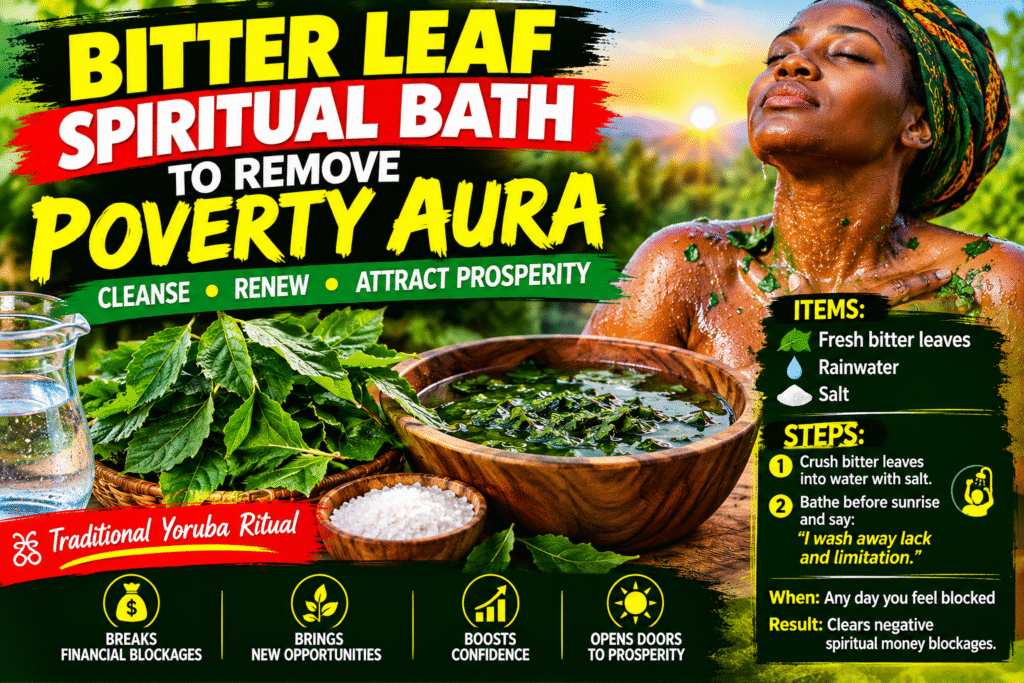
Bitter Leaf Spiritual Bath for Poverty Aura: A Traditional Ritual for Renewal, Prosperity, and Breaking Limiting Patterns
Discover the traditional symbolism of bitter leaf, the meaning of cleansing with water and salt, and how to practise a peaceful spiritual bath focused on abundance, confidence, and a fresh start.

Introduction: Can A Spiritual Bath Help You Change Your Relationship With Poverty?
In many African spiritual traditions, water, leaves, salt, and spoken prayers hold symbolic meanings associated with cleansing, renewal, protection, and personal transformation. Some practitioners use these elements in traditional rituals to represent the release of unwanted influences and the beginning of a new chapter in life.
One plant that attracts attention in African traditional herbal practices is bitter leaf, commonly known as Vernonia amygdalina. Its bitter taste gives it a strong place in food traditions and traditional herbal knowledge across parts of West Africa.
In some contemporary spiritual practices, bitter leaf may also be used symbolically in cleansing rituals intended to help a person let go of discouragement, fear, persistent negative thoughts, and feelings of being trapped by financial difficulties.
A bitter leaf spiritual bath for poverty aura is best understood as a symbolic practice for spiritual reflection, renewed determination, and setting intentions for prosperity. Although some practitioners believe such rituals can clear spiritual money blockages, there is no reliable scientific evidence that bathing with bitter leaf, rainwater, and salt removes a supernatural poverty aura or directly increases wealth.
Nevertheless, a peaceful ritual can provide a meaningful opportunity to pray, reflect, strengthen your resolve, and commit yourself to practical steps toward financial improvement.
1. Understanding Bitter Leaf In African Traditions
Common English name: Bitter leaf
Scientific name: Vernonia amygdalina Delile
Twi/Akan name: The name may vary by community. Confirm the correct local name with a knowledgeable Ghanaian plant specialist rather than relying on an unverified translation.
Other regional names: Ewuro is a recognised Yoruba name. In some Igbo-speaking communities, the plant is known as onugbu. Names differ across ethnic groups and may sometimes refer to different plants.
Plant parts commonly used: Leaves, particularly in traditional cooking and some herbal preparations.
Where it grows: Bitter leaf is widely cultivated or found in tropical parts of Africa, including Ghana and Nigeria.
The symbolic meaning Of bitter leaf
In a symbolic spiritual interpretation, the bitterness of the leaf may represent life’s difficult experiences: financial disappointment, repeated setbacks, discouragement, and lessons learned through hardship.
When the leaf is used in a cleansing ritual, a practitioner may treat it as a reminder to confront these difficulties rather than surrender to them.
The ritual can represent three personal commitments:
- Release: Let go of hopelessness, shame, and destructive financial habits.
- Renewal: Develop a fresh mindset and a clearer vision for the future.
- Action: Take consistent steps toward work, business growth, saving, and responsible money management.
These are symbolic interpretations, not scientifically established spiritual properties of the plant.
2. Ingredients For A Bitter Leaf Cleansing Bath
Prepare the following items:
- A small handful of correctly identified, fresh bitter leaves.
- Clean, lukewarm water.
- A small bowl or basin.
- A clean cloth or towel.
- A pinch of ordinary salt, if desired.
- A prayer or positive declaration focused on renewal and responsible prosperity.
About the water: Clean drinking-quality water is preferable to untreated rainwater, which can contain dust, microorganisms, and other contaminants.
About the salt: Salt is used symbolically in various cleansing practices, but its spiritual meanings are not universal across African traditions. It is optional and is not necessary for the ritual to have personal meaning.
3. Step-by-Step: How To Perform The Symbolic Bitter Leaf Bath
Step 1: Prepare yourself mentally
Choose a quiet time when you can reflect without interruption. Before beginning, consider the financial difficulties you want to address.
Ask yourself:
- What financial habits do I need to change?
- What opportunities have I overlooked?
- What skills or services can I develop to increase my income?
- What practical step can I take this week to improve my situation?
Write down one clear financial goal.
Step 2: Prepare The leaves
Wash the bitter leaves thoroughly under clean running water to remove dirt and other visible contaminants.
Place a small handful of leaves in a clean basin and gently crush them by hand in clean, lukewarm water.
If desired, add a small pinch of salt as a symbolic representation of cleansing and renewal.
Do not add unknown herbs, chemicals, or other substances to the mixture.
Step 3: Offer A Prayer or Declaration
Stand quietly and take a few slow breaths. If prayer is part of your spiritual practice, ask for wisdom, discipline, courage, protection, and opportunities to improve your circumstances.
You may say:
“As I begin this new chapter, I release discouragement and the fear of failure. May I gain wisdom to recognise good opportunities, discipline to manage my resources, courage to pursue honest work, and patience to build lasting prosperity. May my decisions support peace, dignity, and a better future.”
This declaration is a suggested personal prayer, not a historically verified Yoruba incantation.
Step 4: Perform The Cleansing
For a simple symbolic practice, you may pour a small amount of the prepared water over your hands or use it to rinse your hands and feet.
If you prefer a full bath, use ordinary clean water for bathing instead. Avoid applying the crushed leaves or salty mixture to sensitive skin, the eyes, broken skin, or intimate areas, as irritation or allergic reactions may occur.
While completing the practice, reflect on the changes you are prepared to make.
Step 5: Speak Your intention
You may repeat:
“I release the fear that keeps me from moving forward. I welcome wisdom, discipline, useful opportunities, and honest prosperity. I will take practical steps to improve my life and use my resources responsibly.”
The purpose of this statement is to reinforce your intention and commitment. It does not guarantee financial success or establish that poverty is caused by a spiritual blockage.
Step 6: Close The practice
Finish with a prayer of gratitude, a few moments of quiet reflection, or another peaceful practice consistent with your beliefs.
Discard the unused plant material in ordinary household waste or compost it if appropriate. Do not pour plant material into drains where it could cause blockages.
Afterwards, write down one action you will take within the next 24 hours, such as contacting a potential customer, improving a product, applying for a job, or creating a savings plan.
4. When Should You Perform This Ritual?
For a personal reflection practice, you may choose a quiet morning, including a time before sunrise if that fits your schedule and beliefs.
There is no scientifically established day, time, or frequency that makes a bitter leaf bath more effective at attracting money.
You do not need to repeat the ritual every day, purchase expensive spiritual materials, or fear that failing to perform it will bring poverty.
A single reflective practice can be followed by regular, practical efforts to improve your circumstances.
5. What Does Poverty Aura Mean In Spiritual Language?
The phrase poverty aura is used by some spiritual practitioners to describe a perceived pattern of financial struggle, discouragement, repeated disappointment, or a feeling that opportunities never seem to work out.
Different spiritual communities interpret these experiences differently. Some may understand them through ideas about spiritual obstacles, while others may emphasise personal choices, social circumstances, or emotional burdens.
Financial hardship can also result from unemployment, low wages, illness, debt, limited access to education, economic conditions, family responsibilities, or unexpected emergencies.
It is therefore unwise to assume that someone is poor because they have a negative aura, have offended an ancestor, or are under spiritual attack.
A compassionate approach considers both the person’s spiritual beliefs and the practical circumstances affecting their life.
6. Combine Spiritual Reflection With Practical Prosperity Habits
If your goal is lasting financial improvement, consider combining prayer or symbolic cleansing with the following actions:
1. Review your spending. Track your income and expenses to identify where your money goes.
2. Develop a marketable skill. Consider training, customer service, farming, food production, crafts, or another activity suited to your abilities and local opportunities.
3. Improve your business. If you sell herbal products, maintain accurate product information, use clear labels, follow appropriate safety practices, and build customer trust.
4. Save consistently. Start with an affordable amount rather than borrowing money to finance a ritual.
5. Seek trustworthy guidance. Speak with experienced business owners, credible financial advisers, or community members who can help you identify realistic opportunities.
6. Protect yourself from exploitation. Be cautious of anyone who promises guaranteed wealth or demands increasingly large payments to remove alleged spiritual blockages.
Spiritual practices may offer comfort and motivation, but they should not replace sound financial decisions or professional support when needed.
For spiritual cleansing, there is no need to consume the leaves or expose yourself to unnecessary health risks.
Make Renewal The Beginning Of Your Prosperity Journey
The bitter leaf spiritual bath for poverty aura can be approached as a peaceful symbolic practice rooted in personal reflection, prayer, and the desire for a better future.
Its central message is not that a leaf can guarantee wealth, but that a meaningful moment of renewal can encourage you to examine your habits, strengthen your resolve, and pursue opportunities with greater purpose.
Let the water remind you of renewal, the leaf remind you of resilience, and your spoken intention remind you of the responsibility you have to act.
A fresh beginning becomes more powerful when it is followed by consistent action. Pray according to your beliefs, respect your cultural traditions, make informed decisions, and take practical steps toward the life you want to build.
Disclaimer: This article is for educational and cultural discussion. The spiritual interpretations described here are beliefs or symbolic practices, not proven methods for removing poverty or guaranteeing financial gain.